

Candidates in contested County Supervisors and Iowa House District 64 races share their views prior to November 3 election
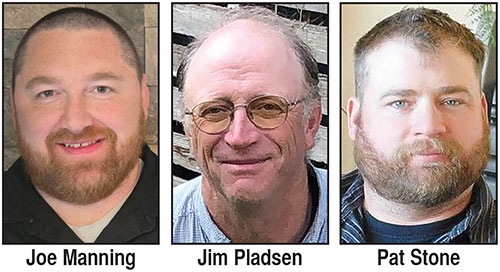
Allamakee County Board of Supervisors: Manning, Pladsen, Stone
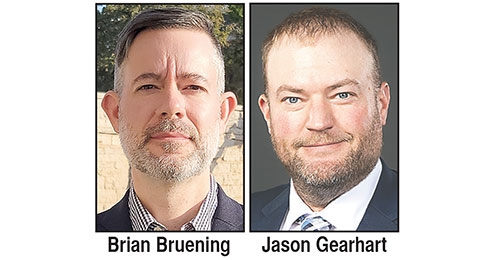
Iowa House of Representatives - District 64: Bruening vs. Gearhart
Tuesday, November 3 will be the date for the General Election to determine which candidates will be chosen to represent their constituents in elected offices at a variety of different levels of government. An election notice listing the respective races on this year’s ballot was published in the October 14 edition of this newspaper (Page 26), listing races at the Federal, State and County levels of government for voters to make their selections in, along with additional ballot and election information.
Allamakee County Board of Supervisors: Manning, Pladsen, Stone
Please provide some background information about yourself.
Manning: I am a lifelong resident of Allamakee County. I grew up on my grandfather’s farm just south of Lansing. My wife Christina and I are raising two girls (ages 9 and 5), and we are proud to call this area home.
I currently work as an electrician at Systems Equipment in Waukon. I have also been serving on the Eastern Allamakee School Board since 2023. In addition, I have dedicated over ten years to the Lansing Fire Department, where I’ve served as both Assistant Chief and Training Officer.
Pladsen: I raise beef cattle and crops on the family farm where I grew up southeast of Waukon. I currently serve on the county’s Soil and Water Conservation District Board and have been a member of the county Planning and Zoning Commission since 2009, serving as Chair going on 11 years.
Stone: My name is Pat Stone. I went to school in Waukon and have been a lifelong Allamakee County resident. I grew up in rural Allamakee County in Hanover Township. I grew up hunting, fishing for a pastime next to the Upper Iowa River, and now share those experiences with my four sons and grandson. I have four boys, Patrick Jr., Mason, Miles and Maverick, and my grandson Parker.
I was formerly the Mayor of Waukon for three terms. I enjoyed the position and feel that I helped make positive changes to the community. I ran for mayor for the same reason that I am running for county supervisor, I care about our community and our way of life including our tax dollars.
I learned my work ethic by working on the farm, baling hay, cleaning calf pens and shoveling ear corn into the feed mill. I wasn’t fond of it then but feel lucky to have that work ethic instilled in me at a young age. I worked in construction as a young adult, doing masonry, welding and carpentry. In 2001 I started my own business, Stone Construction LLC, and am still going in the present day.
In 2019, a business partner and I formed WS Investments LLC. This consisted of rental properties around the tri-state area along with building the new Waterville Bar & Grill and purchasing Goodfellas in Waukon. We purchased the trailer park in Postville and made drastic improvements to it. In The fall of 2025 I sold my shares to WS Investments and retained a few rental properties in Waukon and the Waterville Bar & Grill in Waterville.
What is motivating you to seek a seat on the County Board of Supervisors?
Pladsen: It really comes down to “it’s an important job, somebody’s gotta do it, and I can.” The two retiring Supervisors have a combined total of 25 years of service to the county - Dan Byrnes’ 12 years as Supervisor and Dennis Keatley’s 13 years - four as Supervisor and nine on the Board of Adjustment. That’s a big hole to fill - and while I certainly can’t fill it on my own, I do bring my farm background and 17 years of involvement in county government as a foundation for stepping up to the position of Supervisor.
Stone: I have seen first-hand what lack of leadership and common sense looks like in a council or board position. I believe most people can relate to this, have had frustrations and have felt that their interests have been unrepresented. It is a great responsibility to represent our tax dollars and to make decisions on what is priority, how we fund it and keep in mind the impact that it costs our citizens.
Manning: I find a great sense of purpose in serving my community and I truly enjoy it. I’m not running with an agenda or a list of complaints. I’m running to continue the success of our county and to serve the people who make it such a great place to live. I will always keep taxpayers in mind and work to ensure decisions are practical, responsible, and forward thinking.
As a candidate for Allamakee County Supervisor, what do you feel would be your ultimate responsibility to the citizens of the county, if elected?
Stone: Some of you may not know what a Supervisor’s position entails. I stand by everything below and, most of all, being accountable to the public.
As your elected County Supervisor, my primary duty is to protect and preserve the rights, privileges, and property of our county and its residents. I am committed to maintaining and improving the peace, safety, health, welfare, comfort, and convenience of everyone in our community.
To give you a clear understanding of how I serve you, my core responsibilities on the Board of Supervisors include:
• Managing the County Budget: Reviewing, establishing priorities for, and approving the annual county budget to ensure your tax dollars are allocated efficiently toward infrastructure, public safety, and community services.
• Overseeing County Operations: Providing legislative oversight to county departments - including local roads, secondary bridges, public health, and law enforcement - to ensure they operate effectively and remain accountable to the public.
• Policy Development: Collaborating on the county board to establish local ordinances, evaluate land use, and implement policies that foster economic development and safeguard our natural resources.
• Constituent Advocacy and Casework: Serving as your direct link to local government. I am here to help you navigate county services, answer your questions, resolve local issues, and bring your feedback directly to the boardroom.
Manning: To be a responsible steward of tax dollars with transparency and honesty. Also, to ensure that every voice is heard. I bring a common sense, levelheaded approach to decision making, and a willingness to listen. I value open, honest, and respectful conversations and welcome the opportunity to connect with anyone in the community regardless of the political party you associate with.
Pladsen: The Board of Supervisors is an administrative body which the residents expect to:
1. Use the taxpayer dollar in a responsible manner;
2. Manage county business efficiently and effectively to provide needed services - ranging from law enforcement to solid waste disposal to libraries to veterans services;
3. To make decisions openly and with local public interest foremost.
If elected, what would be your issues of highest priority in helping direct county government?
Manning: I believe one of the keys to effective local government is having the right people in the right roles. Allamakee County is fortunate to have strong elected officials and dedicated employees who keep things running smoothly and efficiently. Recruiting, retaining, and supporting quality employees will be a priority.
Pladsen: I believe there is a lot of overlap on questions 4 and 5, maybe more so in 2026 than other times:
It’s a priority to carefully manage the county’s finances - the challenge is in dealing with changes made at the state level that limit the county’s ability to generate revenue at the same time outside forces are driving the costs of everything higher.
We have a lot of good people on the county payroll and it’s a priority to keep them. As they retire or otherwise leave employment with the county, we want to attract the same quality people to fill those positions. The challenge is, again, working with somewhat limited resources in a competitive job market.
The thing I bring to the table in meeting those challenges is a time-proven record of working with Supervisors, fellow Planning and Zoning commissioners, county staff and the public to come up with real-world solutions.
As a personal priority, while campaigning I have attended local board meetings including city council meetings in all six of the towns that have them. I found it to be a very interesting experience. If elected, I will continue to attend at least one of each town’s meetings throughout the year. This would allow me to gain more firsthand knowledge of what’s going on around the county. It could also provide residents the opportunity to share their thoughts and concerns about county government without having to drive halfway across the county on a workday to speak for two minutes during public comment at a Supervisors meeting.
Stone: My highest priority would be working with the other members to use the tools available to us, like TIF and other tax abatements to stimulate new growth in Allamakee County. Being accessible, getting a feel of the position while learning what I can do to help. Our county employees and department heads keep things running. Making sure that when our staff are retiring that we have a suitable replacement.
What do you see as the greatest challenge currently facing Allamakee County, and what does your candidacy offer in helping address or remedy that challenge?
Pladsen: I believe there is a lot of overlap on questions 4 and 5, maybe more so in 2026 than other times:
It’s a priority to carefully manage the county’s finances - the challenge is in dealing with changes made at the state level that limit the county’s ability to generate revenue at the same time outside forces are driving the costs of everything higher.
We have a lot of good people on the county payroll and it’s a priority to keep them. As they retire or otherwise leave employment with the county, we want to attract the same quality people to fill those positions. The challenge is, again, working with somewhat limited resources in a competitive job market.
The thing I bring to the table in meeting those challenges is a time-proven record of working with Supervisors, fellow Planning and Zoning commissioners, county staff and the public to come up with real-world solutions.
As a personal priority, while campaigning I have attended local board meetings including city council meetings in all six of the towns that have them. I found it to be a very interesting experience. If elected, I will continue to attend at least one of each town’s meetings throughout the year. This would allow me to gain more firsthand knowledge of what’s going on around the county. It could also provide residents the opportunity to share their thoughts and concerns about county government without having to drive halfway across the county on a workday to speak for two minutes during public comment at a Supervisors meeting.
Stone: Recently, after looking over my real estate taxes, I would say the cost of living. We are paying rent on property that we already own. I would like to lower the rent payment. The only clear path to doing so on a county level is to grow our communities. We need to make Allamakee County the go-to-place for residences and business. We need to let individuals invest in our community and work with them, not against them. If we do not grow, each year you will pay more in property taxes and receive less for it. I have experience working with individuals and businesses, along with being able to understand the economic impact it may have.
Manning: One of the most significant challenges facing Allamakee County is the upcoming transition in leadership. As of January 1, 2027, the Board of Supervisors will lose a combined 16 years of experience, with two-thirds of the board stepping into the role for the first time. I feel the responsibility of the Board is to make thoughtful, well-informed decisions that serve the best interests of county residents. With so much new leadership, it will be important to approach this role with a strong commitment to learning.
If elected, I will prioritize putting in the time and effort necessary to fully understand the responsibilities of the position and ensure a smooth transition. I will actively seek out training, resources, and guidance to strengthen my ability to serve effectively.
I recognize that no single person can be an expert in every issue that comes before the Board. When faced with unfamiliar or complex topics, I will take the initiative to research, ask questions, and collaborate with others to reach informed, responsible decisions. My goal is to contribute to a Board that is prepared, transparent, and focused on making decisions that support the long-term success and stability of Allamakee County.
What do you see as Allamakee County’s greatest asset or draw, and in what ways do you feel that can be further built upon for the betterment of the county and its residents?
Stone: We have great people in our cities and rural communities. We live in an area that is wonderful for raising a family or retirement. Our geographic location is God’s country. We need to promote this and grow. When the right people come together, great things can happen. If we are not growing, we are falling behind. I would work to grow.
Manning: Everything about Allamakee County is an asset worth protecting and investing in. From our natural beauty and strong communities to our schools and, most importantly, the people who call this place home, these are the things that make our county a great place to live.
One of the best ways to invest in our future is to invest in our youth. By encouraging the development of more affordable single-family homes, we can help ensure that the next generation has the opportunity to stay, raise families, build careers, and contribute to the communities where they grew up and are proud to call home. No one should have to leave the place they love simply because they can no longer afford to live there.
Pladsen: One of the things that makes Allamakee County special is the fact that some of the best farmers in the country operate here right next to some of the nicest recreational land in the country. Over the years, we’ve also had imaginative and hard-working entrepreneurs build successful businesses in the county. These things combine to create a diversified and resilient local economy and I think the best way to build on that is to just keep trying to move forward.
Iowa House of Representatives - District 64: Bruening vs. Gearhart
Of all the major issues that have come forth in the past couple years, which one do you feel is having the greatest negative impact on our state, and thus should be a top priority, and how would you address it?
Bruening: Economic concerns are front and center in my mind. From unaffordable groceries, the seemingly ever-rising price of gas and diesel, and the lasting negative impacts of an out of control tariff policy, folks in our area have been pressured on all sides by the cost of living. Add to this the reckless moves of the Legislature this last session - a massive tax cut that mostly benefited corporations and the wealthiest while running a $1.5 billion deficit over each of the last two years - and it’s sadly too easy to see why Iowa has the worst economy in the nation.
We need a return to government that actually does effective work. A prime example is our failing privatized Medicaid system which costs taxpayers more but provides fewer services and has left many rural hospital and care centers without proper reimbursement for services. This scheme to move healthcare out of government control has allowed for many unforeseen circumstances that make life more expensive for rural Iowans.
Gearhart: One of the biggest issues negatively affecting Iowans is our cancer crisis. Iowa is near the top nationally in cancer incidence, and we are one of the few states where rates continue to rise. That should concern every one of us.
This session, I wrote and sponsored legislation providing $3 million annually for pediatric cancer research at the University of Iowa Stead Family Children’s Hospital. It passed with overwhelming bipartisan support and was signed into law by the Governor. We have also made historic investments in water quality and reducing nitrates.
Cancer has affected my own family, as it has far too many Iowa families. I don’t believe there is one simple answer or one single cause. We need good research and honest conversations about everything that may be contributing to the problem. Our goal should be to identify the causes we can control and then do everything reasonably possible to reduce those risks. I want to continue pushing those efforts until we start seeing Iowa’s numbers move in the right direction.
From such things as the ongoing discussions about data centers to the newly-proposed steel plant in southeast Iowa, where do you see the balance between economic/technological development and environmental impact, and how would you pursue that balance, if elected?
Gearhart: I believe we can grow Iowa’s economy without abandoning our responsibility to protect our natural resources. When it comes to projects such as data centers, I believe the decision of whether a project is appropriate for a community should primarily be made locally. Local elected officials and the people who live there are in a much better position than Des Moines to decide whether a project fits their community.
At the same time, there is no denying the economic impact large projects can have. They can mean billions of dollars in investment, good-paying jobs, construction work and opportunities for surrounding businesses.
Economic development doesn’t mean environmental laws disappear. The Iowa Department of Natural Resources (DNR) and Environmental Protection Agency (EPA) already regulate things like water use, wastewater, storm water and air emissions. Those requirements don’t suddenly go out the window because a project is large or economically important. I believe in enforcing our environmental laws while also allowing responsible development to move forward.
Bruening: First and foremost, I am calling for a statewide moratorium on the construction of data centers until the Legislature and counties have adequate time to assess and put regulation into place to ensure that any data centers that are built are a benefit to the community and not just out-of-state billionaires. I believe strongly that local folks should have the final say in what gets built in their communities.
Economic development isn’t a zero sum game. With adequate planning and standards, we should be able to create economic opportunity while still maintaining our quality of life. I think it’s important to also get buy-in from all stakeholders. For instance, as an owner of a business that relies on the natural beauty and recreational opportunities of our area to help drive traffic to my front door, it is economically important to me to maintain a clean and sound environment. We can find a balance, but obviously that will take more work and require a lot of outreach with the public, but then isn’t that the job of a legislator in the first place?
As for the proposed steel plant in Lee County, I would not have voted for the incentive package that recently passed in the Legislature. If you do the math, they committed to paying $777,000 per job. Jobs, I might add, that have no guaranteed right to union protections. Not that long ago, the state gave huge tax incentives to another foreign company to create a fertilizer plant in Lee County to help break up the monopoly on fertilizer production. And now the plant has been bought out by Koch Industries, adding to their monopoly, and tax benefits transferred to them.
With reports of Iowa ranking among the top states in this nation in cancer incidence rates, and being one of the few states where cancer diagnoses continue to rise, what can be done at the state level of government to address and reverse those trends?
Bruening: A key to effectively treating cancer is early diagnosis. With all the attention brought to this issue, I hope this will spur people to visiting their doctors and getting cancer screenings, particularly those in high risk categories. A lot of county public health agencies were undercut after COVID, but this is exactly the area where they should be encouraged and empowered to help their communities.
On the state level, we must continue to invest in studies on the causes of these cancers. In particular, there isn’t much data on the effects of nitrates in drinking water on the incidence of cancer; as a state with an extremely high baseline of nitrates in our water, we should be funding studies into actual effects of nitrates so that we can create evidence-based policy.
We all know that radon is a prime factor in lung cancer, so the state must expand testing and mitigation efforts around the state.
Gearhart: We have already taken meaningful steps, but there is a lot more work to do. I sponsored the pediatric cancer research legislation signed into law this year that provides $3 million annually for research at the University of Iowa. The state also invested $1 million into studying Iowa’s cancer problem, including our leading cancers and potential causes.
Radon is a known problem in Iowa, and this year we passed legislation requiring radon-resistant construction in new homes and duplexes. We also know smoking, alcohol use, obesity and other lifestyle factors can increase cancer risk. We should also be willing to study environmental exposures, the food we eat and the products and chemicals we use.
I don’t want to start with a predetermined answer and then look for evidence to support it. Let’s find out what is actually driving Iowa’s numbers and focus our resources on the things that will make the biggest difference. This issue is too important to turn into a political talking point.
What would be involved in any plan you have when it comes to addressing the shortcomings of public infrastructure (roads, bridges) in the state of Iowa?
Gearhart: I’m not an engineer, bridge inspector or bridge builder, and I don’t pretend to be one. I also don’t serve on the Transportation Committee.
I would rely heavily on the Department of Transportation (DOT), county engineers and the people who actually inspect and maintain our infrastructure to help determine where our greatest needs are.
I would like to see good 5, 10, and 20-year planning that prioritizes the roads and bridges in the worst condition and makes sure funding is available to follow through with those plans.
We also need some common sense. Before spending millions replacing a bridge, we should look at traffic counts and determine whether that bridge is still necessary. In some cases, an old bridge may be better off permanently closed rather than replaced if very few people use it.
And when we do replace infrastructure, let’s build good, safe, long-lasting roads and bridges. They don’t all need to be architectural works of art. Taxpayers need safe and dependable infrastructure, and I would rather put their money into function and longevity than unnecessary bells and whistles.
Bruening: Any comprehensive plan to fix public infrastructure would require federal funding. When President Biden passed his infrastructure bill, we saw a flurry of investments in roads, bridges, sewer systems, etc. around the district which is definitely a step in the right direction. But we have neglected our public infrastructure for so long that even a vast federal bill like that was only able to complete a limited number of projects.
Everybody loves a tax cut, but it’s not the solution to every problem. We can’t fund improvements and repairs to public infrastructure with massive tax cuts. This is why Amendment #1 is so dangerous: it would make it nearly impossible to raise revenue through income tax going forward. And when the state “rainy day” fund runs out in a year or two, the state would be forced to raise revenue through other means such as sales tax and fees. The alternative is further slashing the budget and that means less money for education, cancer research, and public infrastructure.
What do you see as this state’s greatest challenge in education, and what do you feel you could contribute as a legislator in overcoming that challenge?
Bruening: Broadly speaking, the biggest threat to education in the U.S. is Artificial Intelligence, particularly Large Language Models (LLMs like ChatGPT). We now have studies that show the student’s ability to write and reason is detrimentally impacted by repeated use of LLMs to complete assignments, etc. The Legislature needs to get up to date on how this technology is harming our students and take immediate action.
Of course, funding and enrollment remain huge concerns for rural school districts. As statewide services such as the Area Education Agencies (AEAs) have been slashed, many of these schools can’t provide the level of services our students deserve such as access to library services, audiology testing, etc. Plus, recent changes in the property tax have further strained local budgets.
I think the school voucher program was a mistake which has funneled public money into private entities without adequate oversight. While rural schools in our area have to keep tightening their belts, large private schools in metro areas of Iowa are funding big expansions of their facilities with this windfall of taxpayer cash, while simultaneously increasing the cost of their tuitions.
Gearhart: One of the biggest challenges I see, particularly in rural Iowa, is declining enrollment. Some of our smaller school districts continue to get smaller while many of their fixed costs remain the same or continue to increase.
There may come a point where some districts have to make very difficult decisions about sharing services, going to one section per grade, or consolidation. Those decisions should be made locally, not forced on communities by the state, but we shouldn’t pretend the problem doesn’t exist either.
A school with declining enrollment still has buildings to maintain and administrative costs to pay. At some point we have to ask whether those dollars would be better spent in the classroom, paying good teachers and providing opportunities for students.
Having served on a local school board, having a wife who is a public school teacher, and coaching kids in our district, I understand how important our rural schools are to their communities. As a legislator, I want to give local districts as much flexibility as possible to make decisions that work for their students while making sure state policy doesn’t make an already difficult situation harder.
What challenges do you see as being most detrimental to agriculture in our state, and what would your ideas be in addressing those challenges?
Gearhart: Prices and profitability. Farmers can do everything right and still struggle because so much of what determines whether they make money is outside of their control. They don’t set the price they receive for corn, beans, cattle or hogs, and they have limited control over the cost of fuel, fertilizer, seed, equipment and other inputs.
I grew up on a farm, and I know agriculture isn’t just another industry in Iowa. It is the backbone of much of our rural economy. When farmers are doing well, our small towns, implement dealers, feed stores, truckers and other local businesses tend to do well too.
Government can’t guarantee farmers a profit, and I don’t think it should try. What we can do is keep taxes and unnecessary regulations under control, protect private property rights, support value-added agriculture and livestock production, invest in infrastructure that gets Iowa products to market, and continue looking for new markets for Iowa-grown products.
We also need to make sure Iowa remains a place where the next generation can afford to farm. If young people can’t get started and existing family farms can’t remain profitable, we have a much bigger long-term problem on our hands.
Bruening: Farmers have been experiencing one of the worst farm economies in generations. And this was before tariffs and the astronomical cost of diesel. They are being squeezed by ballooning costs of land, equipment, seed, and fertilizer, plus the strangle-hold a few corporations hold over meat processing. Many of these issues are on federal scale, but on the state level we can work to break up the monopolistic control a few big players have over the industry. Right-to-repair legislation is in exactly the right direction; laws that exempt chemical companies from liability are not.
Additionally, we need actually effective programs to allow younger people and non-farm descendant folks to get into the industry. The programs we’ve funded in the past haven’t made a dent in the problem, so we need to go back to the drawing board and work on something that allows a wide variety of farmers to get started: from vegetable growers to beef herd operations.
Pick up the Wednesday, October 28, 2026 print edition of The Standard or subscribe to our e-edition or print edition by clicking here.
